
Myth as a Mode of Knowledge, and the Tragedy of Reason

A transcription of my voicenote-to-self from my morning commute.
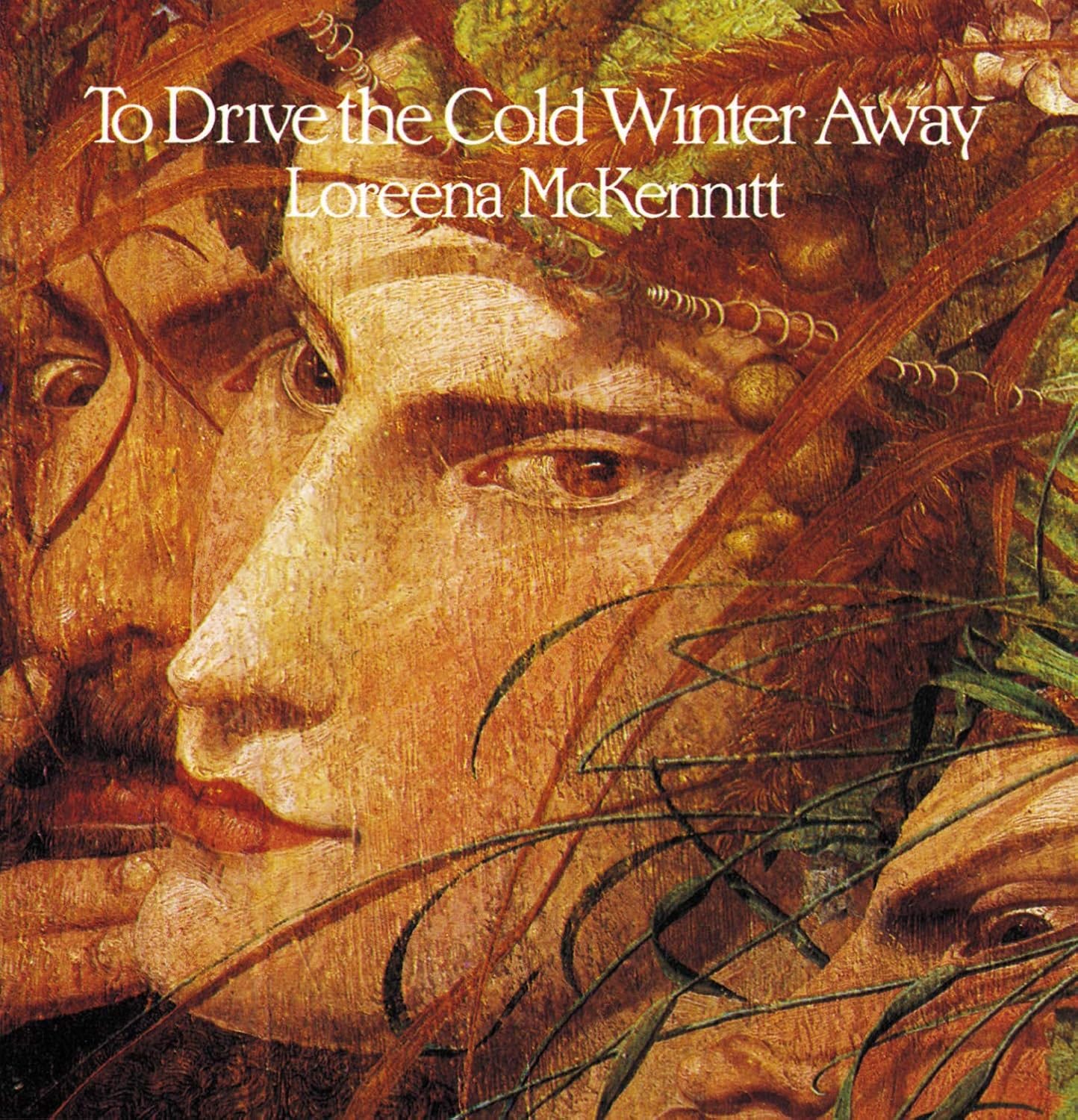
Have some music: listen to Loreena McKennitt sing “In Praise of Christmas” from her album To Drive the Cold Winter Away; feel the invitation of this traditional song to festivity and ritual as the driving away of the cold winter.
The cold winter in which we celebrate the advent of the light and the coming of the Lord — this cold winter is the winter of the human soul and the human heart. What’s proposed to us to drive the cold winter away is fellowship and merriment and ritual and an inhabitation of myth.
I’m meditating this morning on myth as a pathway and myth as a mode of knowledge.
I’ve been perpetually spiraling through some kind of demand to find consolation through reason, and that reason give its imprimatur to some knowledge that will existentially situate life, to make the struggles and questions and darknesses of life tolerable. And more, that will reveal them as providential, reveal them as having a place in the journey of my soul, and restoring the sense, the solid grasp, of what that journey of my soul is, so that I can do the work with a full heart.
That means, “so that I can do the work at all,” because the only way that this work can really be done is with a full heart. Of course, it can be done in dryness and it can be done in darkness; we can keep moving forward in those constrained and dry states of the soul.
But the reason that we keep moving forward is that there is another oasis in view. We are aiming to cross the desert and not to dwell in it permanently, to reach the promised land. And reason, and the search for a foundation in reason, is such a “desert” experience, because reason evaporates: reason is not reliable, it disintegrates. Perhaps there’s some real meditation to be done on the proper role of reason.
At the moment, I’m feeling like there is a role that reason has to play in establishing a balance. The prophetic imagination and the mythic imagination, which are the deeper connection (religio), which have to be the foundation, are capable of going astray. Take this Substack of an ex-USMC national socialist who’s fighting in Ukraine, an accelerationist and nihilist, who is really — if it’s genuine — putting his life on the line in a way that shows the sincerity of his belief that he wants to destroy everything, pull it all down, incinerate it. He’s doing it in Ukraine, but very much involved in and planning to do it in the U.S.
All I can say is that I see quite clearly that he is living out a dark archetype. And basically, there has to be some means of distinguishing between the dark archetypes and the light archetypes. Perhaps I shouldn’t use darkness as a metaphor for evil, but evil is what I really mean, of course. Here we get into the territory of the Johannine writings, and of the Lord himself: if the light that is in thee be darkness, how great is that darkness? It’s simply true that the mythic depths, the imaginal depths, are deeply ambivalent.
Even if the light that I choose is ultimately the light of St. Gregory of Nyssa’s Life of Moses, the light that is so bright that it is another darkness, it is definitively not the lower darkness, not the darkness of cruelty or objectification, not the darkness that crushes the human person. I think there is some critical role for reason to play in this discernment of spirits.
The very dryness of reason is its intrinsic sobriety. And yes, it’s too sober. Perhaps there is a sobriety that’s higher, yet the sobriety of reason is a sobriety that’s available to us in our current state. I feel like we have to make use of it. But precisely finding this dance between applying the astringent sobriety of reason and remaining rooted in the mythic imaginal — this is an impossible task. How does one do this? Because reason tends, its astringency tends, to become acid. Each of them — myth and reason — have their dangerous dimensions, don’t they? The imaginal and the mythic have their dangerous dimension in the relativizing of light and darkness, the apotheosizing of darkness. Whereas the risk of the rational is that its astringency becomes an acid; instead of sobering and purifying, it dissolves.
I’m reminded of the following personal experience of my own quest to make a necklace of fox teeth.
I found a dead fox lying in a ditch on a countryside walk when I was living in the East Neuk of Fife many decades ago; I went back to it with an axe and took its head, intending to strip the flesh off so that I could extract its teeth and make a necklace of them. I put the head in a bath of some caustic solution to strip the flesh off — and the entire thing disintegrated. So there’s reason for you. Serving some kind of purpose, yes — but beyond its bounds it destroys.
I think this is the basic cul-de-sac of modernity: that modernity has wholly given itself over to reason in a reaction against, perhaps, the human mythic past that allowed monstrosities to be apotheosized under the aegis of the mythic imagination. The human heart rebelled against that as well, and resorted to reason, which it wanted to have as an astringent clarity. Then that astringent clarity in itself became destructive.
So it’s this great historical pendulum between myth and reason. And modernity was the apotheosis of reason. I remember Guardini says so eloquently somewhere in the beginning of The End of the Modern World that we thought that we would exile the terrors of nature, and then we found the terrors of nature emerging again within our own technology. And so modernity is the definitive apotheosis of reason, and yet it issues in Auschwitz, Hiroshima, and the Gulag, and is now further metastasizing in artificial intelligence — the eclipse of not just nature but of the human person.
Post-modernity is then a reaction, but all the same demons that were in pre-modernity are in post-modernity. “The strong gods return”: the gods of nationalism, of hatred, of depersonalization — a depersonalization not towards metaphysical abstraction and mechanism, as in modernity, but a depersonalization in the Dionysian sense, a dissolution in Jung’s Wotan, in various ways. That dissolution is what is manifesting in the anti-rationality of post-modernity. Even the “constructive” post-modernism of process-relational philosophers and speculative metaphysicians is really not post-modernity, it’s just modernity. It’s an attempt to resuscitate modernity because it’s still given over to reason; it’s an attempt to resuscitate reason.
Perhaps that’s what constructive post-modernity basically is: an attempt to resuscitate reason, rising out of this sense of desperation that where our world has collapsed and the strong gods have returned and we have no defense against them, it’s a catastrophe, because we’re headed towards a sociocide and an ecocide, that we manifestly see occurring even when it’s not an outer warfare; we see it in the inner warfare of our own machines against ourselves: the contemporary disintegration of human society, human culture, human relationship, human being.
The question of post-modernity is, How shall we welcome the return of myth without losing the Archimedean point for discernment between good and evil, and the Archimedean point for the critique of the mythic imagination — the Archimedean point for the critique of mythic imagination that we hoped reason might be, and that reason might still be, but somehow it has to be a reason that is itself fed by the deepest sources of knowledge.
Again, what is post-modernity reacting against, why is post-modernity seeking the return of the old gods? Because apotheosized reason fails. It fails to give us true knowledge, it fails to orient us in the journey of our life, it fails to orient our hearts and our souls. We can’t live without the imaginal, we can’t live without the mythic imagination, and yet the mythic imagination is ambivalent. So here is the basic human conundrum that we’re encountering with fresh pathos in post-modernity.
Logos and mythos — and what is the relationship between these two? Apollo and Dionysus. Do we have in Christ the joining of these mythic figures? We certainly don’t have it in the working out of Christian thought and feeling and existence — at least, not yet. And again, Christianity needs its Druidry. A fully reasoned Christianity simply doesn’t work, it’s not real, it’s not alive. Nothing that’s not mythic is alive.
Still, I keep resorting to reason, and I keep coming up against the fact that reason dissolves in my hands and dissolves everything else in my hands and just leaves me hopeless and wandering when relied upon by itself. What is to be relied upon is available to me through a mode of knowledge that is poetic and mythological. And of course reason asks me to make a case that this mythic mode of knowledge is reliable.
Reason asks me to make that case — and it is a legitimate request, because reason there is performing its discerning role and essentially saying: Listen, there is also self-deception and delusion and obscurantism that masquerade as mythic “knowledge.” Reason says: Look, I’m doing you a service here, I am helping you determine whether you’re deluding yourself or not, and that means I’m helping you discern whether you’re serving light or darkness. I’m helping you — please let me help you.
But the mythic conscience is now suspicious of reason, and it says: You’ve offered to help me in the past, and in the past when you’ve offered to help me you have taken the things that are most precious to me and you’ve smashed them, you’ve torn them from me; and you’ve offered to guide me and you have misguided me and left me wandering in a dry wilderness where there is no water. And therefore I suspect, O reason — says myth — I suspect, O reason, that you are not living water, that you are a broken cistern in which there is no water.
And so we have this fraught, conflicted dialogue going on between myth and reason. Stepping back, I absolutely feel with immediate intensity how necessary they both are. Perhaps it’s just that each one is the other’s caution: reason is the caution of myth and myth is the caution of reason. Reason says to myth, be careful, you can be deluded; and myth says to reason, be careful, you can be proud and you can be overweening. And so perhaps we just need to have both in a balance, and we are, after historical epochs of extremity, we’re discovering a new balance, we’re discovering how to maintain a balance.
Perhaps this folds into Barfield’s notion of final participation. It certainly folds into Jesus’s “be ye wise as serpents and harmless as doves.” And yet Jesus’s final note in this regard is on childhood, on a divine childhood. And I do keep coming back into this: that the mythic imagination is life, and reason must be the handmaiden and not the mistress. Perhaps the same as the relationship of philosophy and theology — that reason must be the handmaiden.
Of course, to end with a deep issue, this all also has its resonance in the over-masculinization of society and of human culture, and in the loss of the archetypes of the divine feminine. Mythically then, where reason has occluded the divine feminine — Apollonian reason doesn’t like that indefinable realm that is in its sense vague but is actually the matrix of life — we need, as a part of the redressed balance, the recovery of the divine feminine.
AI Statement: I am a flesh-and-blood human being; I wrote every word of this myself and I meant all of it.
If you’d like to leave a one-time tip because you enjoyed this piece, you can do so here.
I offer my paid subscribers personal correspondence on the spiritual life by snail mail. If my writing resonates with you and you would benefit from this kind of conversation, you can subscribe below.
I would say that there's a third term—pneumatic intuition—which must ground both imagination and reason. Imagination in itself is unable to tell light from dark, or reality from phantasm. And reason, for its part, is mercenary: it can work to produce something like a coherent system from *any* axioms that you feed to it. (Modern reason is not uniquely rational, it just reasons from certain disenchanted axioms.) So, how do you find true axioms? That's the job of pneumatic intuition. And such intuition is self-verifying, in the same way that you know you're awake when you're awake. There is no possible external proof to be had; we can't know except by knowing. People with different foundational axioms live in different realities, and that's how it has to be, unless there is a *revelation* to provoke a radical shift.
As for the recovery of the divine feminine, I'm on it!—
https://beulahrising.substack.com/p/project-zoeurgy