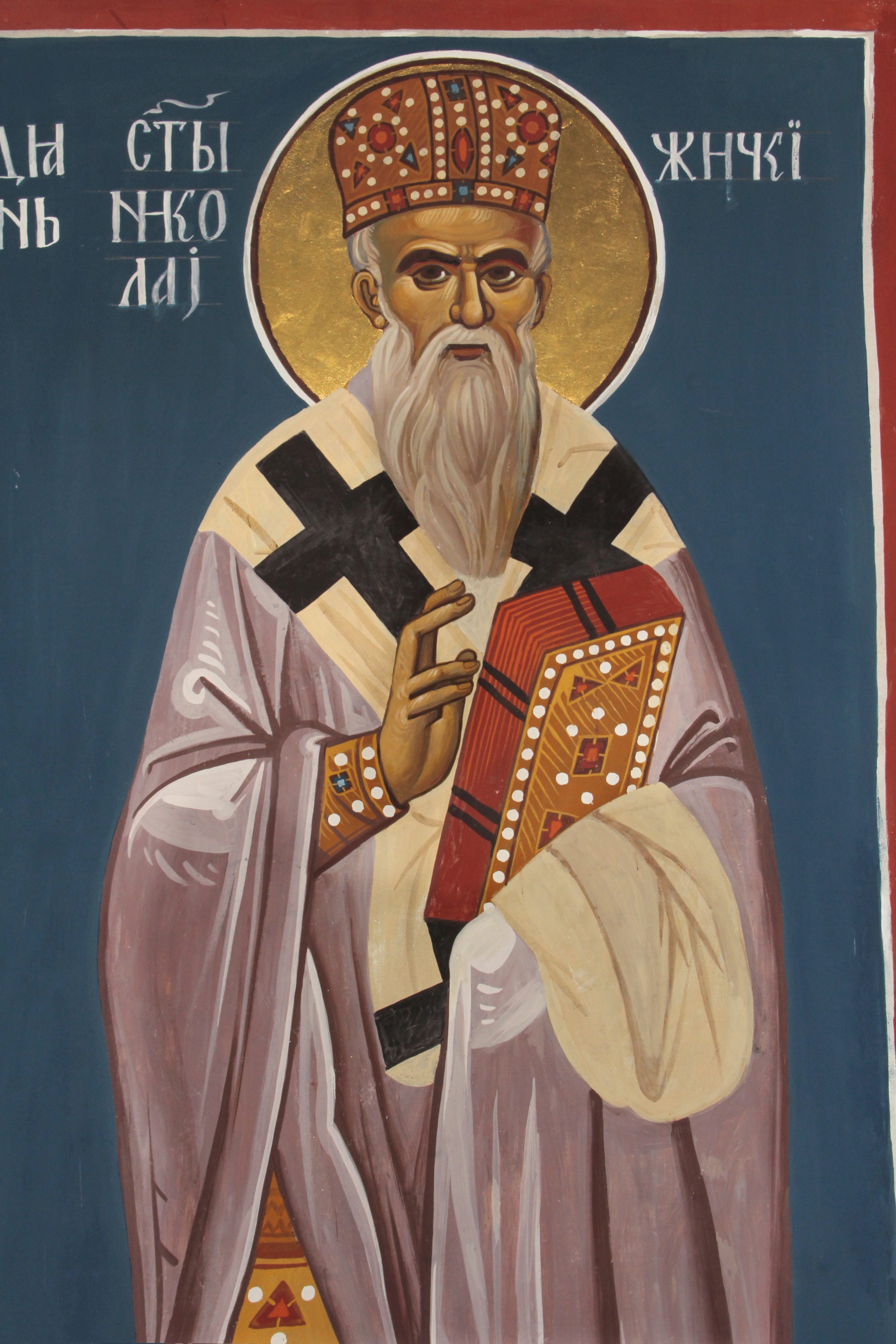
INSTEAD OF A PREFACE
A Letter to Students of Theology About Christian Philosophy
Many times you have asked me whether Christianity has its own philosophy or not. In the history of philosophy you were taught that the following can be called Christian philosophers: Descartes, Kant, Leibniz, Berkeley, James, Solovyov, and others.
You have heard how Roman scholasticism adopted Aristotle as its official philosopher, even though the Western teacher Tertullian said: “Philosophers are the patriarchs of heresies.” Yet you were troubled by the great discord among these philosophers on essential questions. How could all of them be called Christian philosophers when they do not share the same teaching about God, about the soul, about nature? “That you all say the same thing,” the Apostle commands, “and that there be no divisions among you, but that you be perfectly united in the same mind and in the same judgment” (1 Cor. 1:10). You know that Christian revelation is without a single error, not even so much as a jot. How then would it be possible for a philosophy that proceeds from that faith to be plural rather than singular — not one but many? And with such disagreements and contradictions in their assertions!
To your question I have answered that Christianity has its own distinctive, organic and systematic understanding of life and the world, but it is different from all human philosophies. And that is all. Still, I promised you that sooner or later I would set forth this Christian understanding more fully. By now offering this little book to your attention, I am keeping my promise. How well — let the Church judge. This is not my personal philosophy — God forbid — but, I believe, the understanding that the universal Orthodox Church has held from its beginning until today. I will tell you what in this work is mine: that all my best life-experience agrees with what the luminaries of our Church have said and written. What I have received and made my own, that is what I hand on to you.
An English historian (Gibbon), writing about imperial Rome, says that in those times religion was regarded by the people as true, by the philosophers as false, and by the statesmen as useful. Even today in baptized Europe one can hear such statements. The saying is often repeated: religion is the philosophy of simple folk! But we ask: which religion? That English historian is speaking of the pagan, idolatrous religion. If that is what is meant by “religion,” then it is madness to call Christianity a religion. “What fellowship has Christ with Belial?” Christianity is not a religion like other human religions, by no means; rather, Christianity is the heavenly revelation of truth, the Good News to the human race, not from man or angel, but from God the Creator Himself. Christ said: “You will know the truth, and the truth will set you free.” Free from what? Precisely from religions, from human philosophies, from self-appointed worldviews, from the tyranny of all the worldly delusions that oppose the Truth, whatever their name and whatever platter they are served on. In the same sense the great Apostle says: “Brothers, see to it that no one takes you captive through philosophy and empty deceit, according to human tradition, according to the elements of the world, and not according to Christ” (Col. 2:8). For truth is one, while human opinions are many. Truth is always the same and always consistent with itself. Christ’s truth has no parallel in any system that has arisen from the private reason of an individual man. But I say this only in passing, and only to strengthen you in the conviction that Christianity is neither one of the religions nor one of the philosophies, but an entirely distinct, original, and perfect organism of divine living truth — light-bearing and salvation-bringing. And also so that you may know with what conviction I wrote what I dedicate to you, the future pastors and standard-bearers of the Church of Christ.
I have entitled this composition Symbols and Signals because I could not find words in the Serbian language with exactly the same meaning. Images and Parables could only partly express what is conveyed by the classical terms Symbols and Signals.
This work is neither exhaustive nor final. It is only a signpost — yet, I believe, a reliable one — that can be of use to you in your own observation and reading of the wonders of God’s world. Occupied with diocesan duties, I scarcely found the time to write even this much. But I place my hope in you who will understand and make these written words your own: that in due time you will labor to develop and present this subject more fully, to the glory of God and for the benefit of the Christian people.


Human philosophy is offended by the primal, weird nature of the New Testament, 1 Corinthians 1:23 Come on! the Father performing a human sacrifice on our behalf! - Romans 3:23, 1 John 4:9-10.
Intriguing, in the light of Colossians 2:8. Looking forward to it.