

I should say this more simply than I have before, just to be clear: I’m an ecumenist, and a radical ecumenist at that. Like a lot of converts I was once an exclusivist and a rigorist, but the truth is, this is not a position that I think can be honestly maintained with an open heart — that is, a perceiving heart, a sensitive heart, a heart that values people more than ideas.
Who can really look with charity at Christians outside his own confession and conclude that they’re not in the church? What does “the church” even mean? Almost all of us come to some way of including “the others,” sometimes while managing to maintain the centrality of our own ecclesial home, sometimes as a straightforward pluralist who just rejoices in the riotous diversity without needing to impose any structure on it. In any event, the pious old Evangelical grandma is obviously a Christian, and that means that in some sense she’s in the Church. Period.
Alexei Khomiakov, from The Church Is One: Так как Цеpковь земная и видимая не есть еще полнота и совеpшение всей Цеpкви, которым Господь назначил явиться пpи конечном сyде всего твоpения, то она твоpит и ведает только в своих пpеделах, «не сyдя остальномy человечествy» (по словам апостола Павла к Коpинф.) и только пpизнавая отлyченными, т.е. не пpинадлежащими ей, тех, котоpые от нее сами отлyчаются. Остальное же человечество, или чyждое Цеpкви, или связанное с нею yзами, котоpые Бог не изволил ей откpыть, пpедоставляет она сyдy великого дня. “Since the earthly and visible Church is not yet the fullness and completion of the whole Church — which the Lord has appointed to appear at the final judgment of all creation — she works and knows only within her own bounds, ‘not judging the rest of mankind’ (in the words of the Apostle Paul to the Corinthians), and recognizing as excommunicated, that is, as not belonging to her, only those who excommunicate themselves from her. The rest of mankind — whether foreign to the Church, or bound to her by bonds which God has not deigned to reveal to her — she leaves to the judgment of the great day.”
And again, Наши перегородки до неба не доходят, that is, “our partitions do not reach up to heaven” — a Russian saying attributed to several 19th century hierarchs and quoted approvingly in the 20th century. As near as I can tell, it likely was spoken by Metropolitan Platon (Gorodetsky) of Kiev (1803–1891), who served as Archbishop of Riga and Jelgava from 1848 to 1867 — a see where he certainly encountered a richly diverse community of Orthodox, Old Believers, Catholics, and Lutherans. He had a reputation for an irenic, conciliatory pastoral manner. In any event, this is a legitimate and deep thread in the Russian Church, apparent in the great St Philaret of Moscow.
I had a moment many years ago when watching the Iranian film Color of Paradise. You may know the story: a blind boy is rejected by his father, who just wants to be rid of him so he can find a new wife. One of the few characters who loves the boy is his grandmother. There was a scene where she was praying her prayer beads. I don’t know if this is the case in Shi’i Islam, my experience has all been with Sunni Sufism, but the prayer beads are often used to invoke God under His many names, the Majestic, the Subtle, the All-Merciful, the Beautiful… I saw her praying these beads and I could not escape the knowledge that God hears her and loves her. “Behold, I stand at the door and knock” — whoever said that “opening” requires a particular set of ideas to be held consciously by the mind? Who could maintain this? Which of us can say that the ideas we hold — which ought to “remind us of straw,” as the greatest theologian of the west said — are so luminously perspicacious that we can think they are anything other than a child babbling? “My son, give me thine heart, and let thine eyes observe my ways” Prov 23:26.
To the convinced exclusivists, I just say, yes, and. I can’t not see the primacy of the heart and the conscience. I can’t not see that God is the lover and judge of hearts, that the disposition of the heart is the fundamental reality that governs our relationship with Him, not accidents of birth or of culture or of ideology. “The devils also believe, and tremble.”
Of course, we have to stand where we stand; we have to confess the truth we see; but it is a fundamental gesture of the heart to acknowledge that our dogmatic “enemy” is doing the same thing, unless he is truly overwhelmed by ill-will, i.e., not by his incorrect ideas but by the corruption of his heart. And then in the midst of the disagreement, a light shines — a light in which we acknowledge our own fallibility and weakness, in which we stand in awe of the grandeur of God’s truth that so outstrips us, in which our vision of mercy floods our contraction and fear.
I feel it like music. I have many genres of music that, when I’m in the proper mood, I’ll hear and think “this is what I love best.” The Father’s “many mansions” are like this for me. It’s like some dispositive astrological planet moving in my internal heavens.
Today, my heart is captivated by the traditional Gaelic music I grew up with.
Maybe that will go on for weeks or months. But then a turn will come for European early music…
or for medieval and renaissance sacred choral music…
And a turn might come for Tuareg desert rock…
or dub techno…
or tribal electronica…
or 70s cassette New Age (hello Iasos!)…
or classical Hindustani music…
or qawwali…
or the Armenian duduk…
or Fela Kuti’s groove symphonies.
Yes there are different layers of depth, but the truth is they all bring something to the table that at this or that time, my heart craves.
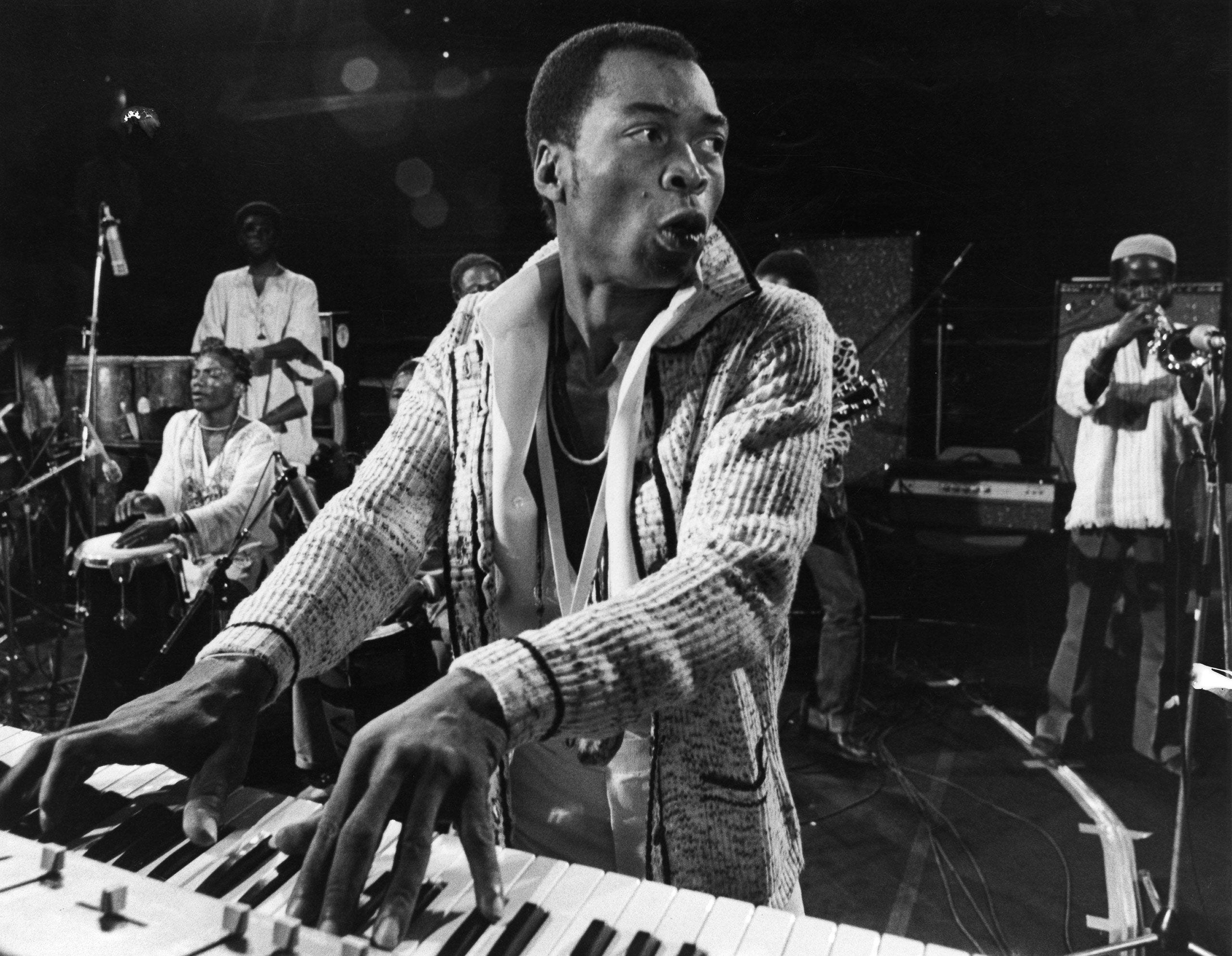
This is honestly the way I feel about theology. Yes, I’m a communicant of the Orthodox Church. I sing the creed every Sunday and I mean it. I receive the mysteries. I love my church very much, and after the decades, it’s home in a way nothing else is. But still, I am fundamentally, in my heart, a holder of multiple citizenships. Here are a few:
Orthodoxy — obviously. But truly, at this point, the vibe, not the rules. I know the rules, but as in language, the point of knowing the rules is to know the spirit of the rules and follow it rather than the letter. I love the gestalt, the messy whole. I struggle with parts of it, I reject parts of it. My Orthodox spirit animal is Nikolai Berdyaev, a courageous freethinker and yet also a spiritual child of St Alexei Mechev. I venerate the Fathers more than I take their theology as gospel. So shoot me.
John Moriarty’s “Silver Branch” Christianity. This is the mythopoetic answer to my child’s soul that loves Ireland, who was weaned on Tolkien, this is the bursting of the whole conceit of the philosophy of the west, a Christian Nietzsche perhaps to lead us down and out and under and through. This is my Druidic ace in the hole.
And a lot of you will flip out at this one: Mormon Christianity. There is something incomparable here, something obviously ancient and obviously new. This is an inspired Christianity that finally, heroically — in a way like Moriarty in spirit, if totally different in vibe! — breaks Christianity out of the crust of Greek philosophy. It’s a process theism before process theism, somehow cooked up by an uneducated farmboy from backwoods New England. That alone should give any honest questioner pause. It’s a Christianity that rejects “omnigoddism,” the timeless, spaceless, finally impersonal Absolute beloved of philosophers and philosophical theologians. It’s also so American, deeply optimistic, deeply future oriented, deeply pragmatic. Trying on Mormon doctrine to get a taste for how the world feels when you believe it is a really interesting exercise. Recommended for the genuinely open-minded: Terryl Givens’ The God Who Weeps and The Christ Who Heals, and James Faulconer’s Thinking Otherwise.
Personally, I think there is enormous scope for dialogue among all of these widely differing traditions. Martin Shaw, now Orthodox, is essentially a spiritual child of John Moriarty. And Catholic theologian James Webb modeled how “great tradition” Christianity can learn from and appreciate Mormon faith and praxis in Catholic and Mormon: A Theological Conversation.
There’s more traditions that I love. We all have so much to learn from each other, we each have gifts that the whole Body needs! The ranks of the rigorists are full. I’ll be over here jamming with the ragtag ecumenists. Come on, among all these new converts coming into Orthodoxy there have got to be some freaks and weirdos. Looking forward to your joining me. Or yelling at me. Go for it.
Part of the benefit of a book is that when you’re done reading it, you know the author a little bit. Reading random flotsam online, you know the author not at all, so you’re easy prey for whatever psyop may be getting transmitted through a given piece of schlock.
Ask yourself: when in normal life, outside electronic media, would you ever just give credence to something said by a person you don’t know at all? Yet this is the character of virtually all electronic media — except perhaps for the traditional blog.
The wonderful thing about buying DIY books is that you know that because you bought the book, there is one more copy in the world than there would have been otherwise.
It’s really hard to really remember that the anons are really people. There is something so insulated, muffled about interaction here. Thinking this after hearing Laeth’s voice for the first time. There is something embodying about the voice, some truth of the voice, that this medium works against. Maybe we need to try hearing the writer speak as we read.
It's interesting. I'm a cradle Orthodox who went on a long journey back home. I used to be wildly ecumenist and I like how you compared it to music appreciation and not getting stuck in a genre. But-
And this is in fact not me yelling at you.
This is just some sober reflection from someone who has been to a lot of spiritual discotechs;
Orthodoxy is *the* medicine. It's medicine for a sick and bleeding world, and all of us kooky, angst-ridden, poured out sinners. Everything else, even other branches of Christianity, will have shards of beauty, reflective gems of glorious truth, but they are not the Cure.
Obviously the old evangelical grandma is in the "beloved by Christ" club. But that doesn't make evangelical Christianity and Orthodoxy "the same" which is really why ecuminism is dangerous.
Being anti-ecumenical Is not about Christ excluding people from his body; it's about humans being crystal clear what the medicine is and what it is not.
The Mormon tradition is quite beautiful, I spent a lot of time in Utah when I was a recording artist. I toured and I have a lot of awe and respect for LDS faith. And, they have some extremely confusing beliefs and interpretations about who Christ is that make receiving his medicine more convoluted than it needs to be. Do I think God is going to send well meaning people to hell because they wanted to be close to Christ? Absolutely not.
Are there traditions in Mormonism that put well meaning folk in danger of straying from God; yes, there are. Not in an abstract "they believe the wrong thing" but in a real legitimate day to day lived reality way.
My deep love and appreciation for all cultures and creatures just does not extend to the confusions/idols/gods/demons/whathaveyou that oppress them.
I'm not ecumenical precisely because I love all of humanity. Why would I pretend every bottle in the chemist is the same when there is only one sure antidote to the venom of sin?
This all seems so *obviously* correct to me that I often don't even regard myself as belonging to the same religion as the exclusivists, whose disposition is very foreign. As I write in my book:
“'Not all who say My name will be saved,' declared Jesus. That makes sense enough, given that salvation is first and foremost a matter of an inner turning of the heart, a rising of the living soul. Any charlatan or hypocrite could recite a mere series of words for the sake of his own personal gain, and a deity who fell for such a gambit would not be worth believing in. But the Lord sees straight through us, and so of course not all who say the name will be saved, since the word itself is impotent if it isn’t backed by sincerity and conviction. The other way around, however, must also be correct: many who don’t say the name are surely saved as well. This point follows from the fact that the whole game has to do with the status of the heart, and not always a formal confession of faith that may or may not be uttered by any given person. If a man’s heart is in the right place, then in principle it should matter little if he 'officially' believes in Jesus—since his heart already does, irrespective of whether his tongue and mind decide to comply."