

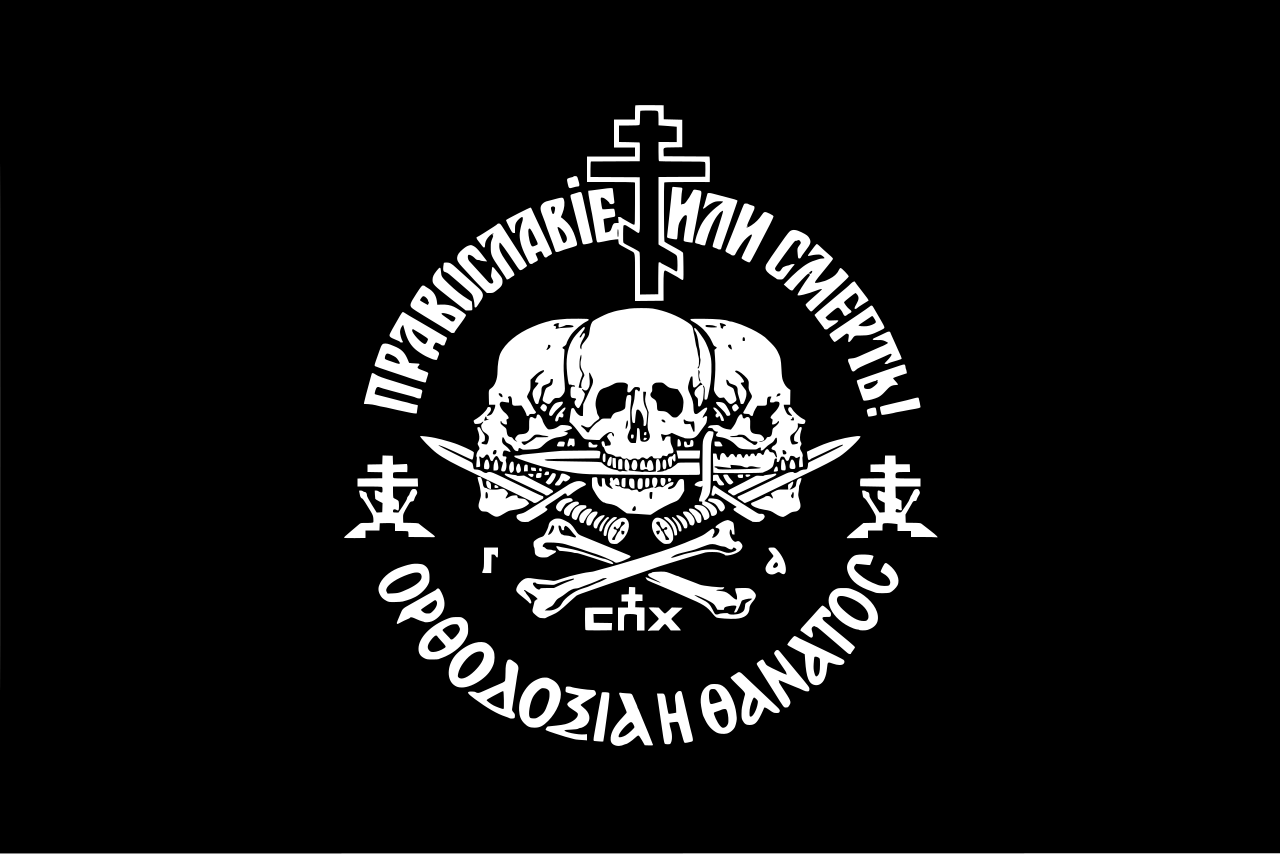
Back in the day, the battle lines were very clear. When I became Orthodox, the choice was between “World Orthodoxy,” which participated in the ecumenical movement, sent representatives to the joint theological commission with the Catholic Church, and whose delegates sat on various committees in the World Council of Churches, and on the other hand, the panoply of the “resistance” — ranging from the moderates of ROCOR to the various Old Calendarist “true Orthodox” synods in Greece, Romania, and Bulgaria. (There was also the perpetual fruitless search for any real descendants of the Russian Catacomb Church.)
You may think woke bullsh*t started only after the launch of the iPhone and the Obama presidency, but in fact, many Protestants and a healthy slice of Catholics were batsh*t crazy wokesters even back in the early 90s, when dinosaurs roamed the earth (ask Archbishop Lefebvre). And still, most Orthodox thought it worthwhile to talk to them and even to pray with them (“is outrage! is against holy canons!”).
ROCOR had anathematized ecumenism. It was out of communion with the rest of the Orthodox world, except for the patriarchates of Serbia and Jerusalem. I am not sure how they justified that theologically, since both of the latter participated in the ecumenical movement in various ways and were also in communion with the Patriarch of Constantinople, who had, since the glory days of Patriarch Athenagoras, been highly chummy with the Pope of Rome and had even dared to lift the anathemas of 1054. The “two lungs” language started with Athenagoras; Pope St John Paul II just adopted it from him.
There was a healthy, vibrant,1 and entirely marginal and irrelevant family squabble that went on between those “resistance” factions like ROCOR and the synod of Metropolitan Cyprian in Greece (whose U.S. outpost is/was the Old Calendar monastery in Etna, CA), who believed that the “New Calendarist and ecumenist” Orthodox local churches still had grace and real sacraments, but had to be “walled off” from communion, and those like the various shades of splintered Florinite and Matthewite synods who believed that every church but their own was comprised of graceless heretics. (Alexandre Kalomiros took the whole thing to its logical conclusion, a kind of Greek analogue of the Old Believer bezpopovtsy, deciding that none of them had grace — so he died in a church of one.)
But if you were a young zealot in those days, and believed that ecumenism was a heresy, you didn’t dillydally in your local Greek or Antiochian or OCA parish and watch Josiah Trenham and Peter Heers and Jay Dyer videos and get a 300-knot chotki and rant online. You put your money where your mouth was and you left the communion of “World Orthodoxy.” Because you were actually consistent. You went to ROCOR, or to a Greek Old Calendar parish, if you could find one. And usually you could!
You know how we yell at small-o orthodox Anglicans because they remain in communion with hierarchs who promote sodomy, transgenderism, communism, and outright atheism? Well OK, the same applies to you. If the Orthodox Church alone is “the true church,” full stop, then every single mainstream Orthodox body in the world is in heresy, because of the countless documents issued by theological commissions concerning the Catholics and the Miaphysites — at the very least. Indeed, if you’re going to hold the rigorist line, you can’t even be in communion with someone who’s in communion with ecumenists, even if they’re not ecumenists themselves.
(Thank you, highly organized Roman Catholics, for keeping all the receipts in one place.)
So if you really believe that, grow a pair and go to the True Orthodox. You can’t go to ROCOR any more, because they got bought off, and reconciled with the Sergianist ecumenists who staff the Moscow Patriarchate (if you don’t know what I’m talking about, you need to spend more time online).
But of course, the rigorist Orthobros won’t do this, because doing so would consign them to oblivion. They would have to grapple existentially with being a tiny, despised minority, and worshipping in living rooms (or strip malls, if they’re really lucky.) They would lose their panache. They would lose the great bulwark of historic and contemporary Orthodoxy standing in serried ranks behind them like a host of angry angels. As it is, they can pose and preen and use the Orthodox Church as a prop for their pride, even as it engages in ecumenical dialogue that they proclaim urbi et orbi is a “betrayal of Orthodoxy.”
“Orthodoxy or death,” as the monks of Esphigmenou said? Nah, for the Orthobros, it’s not even “Orthodoxy or inconvenience.”
In case my sarcasm isn’t evident, these squabbles were actually extremely hostile internecine free-for-alls between snarling groups of what the People’s Front of Judea (or is it the Judean People’s Front?) might call “splitters.”
It’s refreshing to read someone engaging with the contemporary convert scene in American Orthodoxy who remembers what it was like in the 90s and earlier. You paint a picture I immediately recognize. I remember what it was like being an OCA “catechumen” (scare quotes because I was already baptized!) in the summer of 1999 and discovering Orthodoxinfo.org on my parents’ dial-up. I’d just waded into Orthodoxy and already I was learning that most of Orthodoxy was gravely compromised—it was exhilarating!
This kind of stuff gives people a high. And that explains both why the rigorists of the 80s and 90s went off into “non-canonical” bodies and also why the rigorists of our own decade don’t. Because, as you say, if they did, they couldn’t preen themselves online.
Why didn’t *I* go down the rigorist/schismatic root in my first few years? In part for social reasons and also logistics: there was no such church anywhere near where I lived and all my friends were in the OCA.
But I also think that my Anglican upbringing and formation instilled in me a sense of stable, “mere Christianity” – evangelical, catholic, ecclesial, and sacramental. This both kept me grounded and also forced me to always keep a door open for the ecumenical movement.
But this sense is not something many recent converts to Orthodoxy (or Catholicism) are bringing with them. Whether they’re coming from pop Evangelicalism or from not much of anything at all, their vacuous cultural background makes them particularly susceptible to the shock and awe of Orthodox liturgical esthetics, asceticism, and dogmatism. And they get drunk on it. It’s a form of romanticism that can have its place for a time. But at some point it must either give way to a more mature trust in God or it will start to stink.
You have unleashed your firebrand side, I see!
If, like me, one has seen the rather rotten fruits of rigorism in others, one is no longer drawn by its siren call.